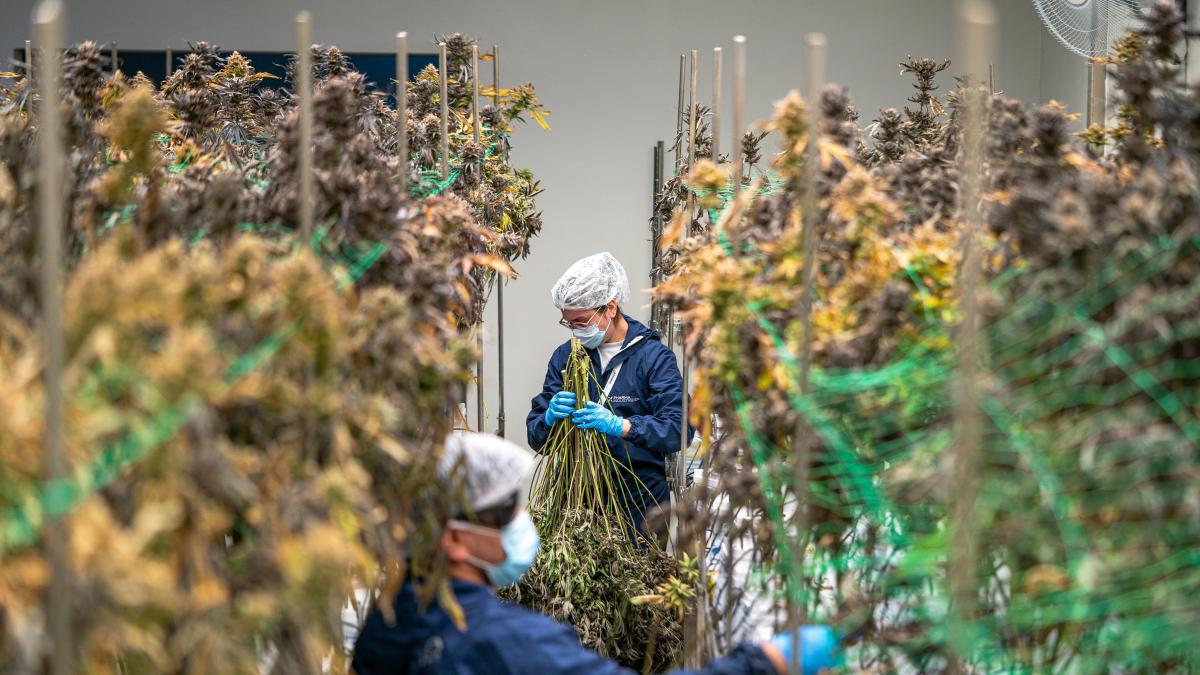
The cannabis industry is one of the fastest-growing agricultural sectors in the United States. But unlike most established industries, little is known about the health risks workers face on the job. With so many people working in cannabis cultivation, trimming, drying and processing operations, it’s important to understand the safety challenges that come with this rapidly expanding industry. New research shows that cannabis workers are exposed to airborne dust and other respiratory hazards, have a high rate of work-related health symptoms, and may be at risk for respiratory illnesses and diseases.
The National Institute for Occupational Safety and Health (NIOSH) has recognized cannabis production as an emerging area of occupational health concern. In the NIOSH Cannabis webpage, potential hazards highlighted include dust, muscle strains, and chemical exposure. This recognition underscores the importance of continued research to identify risks and develop guidance to protect the health of workers in cannabis production.
Researchers from the Pacific Northwest Agricultural Safety and Health Center (PNASH) at the University of Washington are helping fill this gap through studies funded by NIOSH. In collaboration with the cannabis industry, this research aims to identify respiratory hazards, understand how and when exposures happen, and develop practical solutions to employers and workers can use right away.
What we know so far
Recent research led by Dr. Chris Simpson, Dr. Coralynn Sack, and industry partners has contributed to the first national picture of respiratory and allergy-related health concerns among cannabis production workers.
A multi-state study published this year identified 30 confirmed or suspected cases of asthma linked to cannabis work. Most cases were among employees involved in cultivation, trimming, or processing, where exposure to airborne cannabis dust and plant particles is common. More than half of the workers developed asthma after entering the industry, and several experienced severe asthma attacks, including two fatalities. The study also found that asthma-related cases are likely underreported because no formal reporting system or OSHA safety standards currently exist for cannabis workplaces.
A second PNASH-led study looked deeper at how cannabis exposure may affect respiratory and immune health. In this study, 35% of cannabis workers tested positive for cannabis sensitization during skin-prick testing, and workers were 9.5 times more likely to be sensitized than people who do not work with cannabis. On average, cannabis workers showed signs of increased airway inflammation, decreased lung function, and more allergy symptoms.
Together, these studies show that respiratory and allergic health effects can occur in cannabis production, and that preventive measures, such as better air quality, dust control, and worker training, can make a meaningful difference.
Although there is still uncertainty around what exactly causes these symptoms, early findings suggest that cannabis workers could be at increased risk for occupational lung diseases, including work-related asthma. Understanding these risks is essential for protecting worker health as the industry continues to grow.
“Our goal is to better understand the exposures that may be affecting worker health. And where appropriate, to help identify practical solutions to reduce those exposures,” said Christopher Simpson. “By collaborating with the cannabis industry, we can design and test solutions to make cannabis workplaces safer.”
Testing workplace solutions
PNASH researchers are also designing and testing solutions for respiratory health. They are conducting a panel study of cannabis workers to evaluate how specific airborne contaminants released during production may be linked to respiratory health outcomes.
The study also includes testing engineering solutions, like ventilation systems that capture dust right at the source, to help reduce how much dust and airborne contaminants workers are exposed to during production tasks. Based on the findings, the team plans to develop best-practice guidance and training materials that can help employers reduce safety risks and create healthier workplaces.

Building toward safer workplaces
PNASH’s work is part of a broader effort to turn research into practical tools that benefit employers and workers alike. Findings from this study are already being integrated into new cannabis-specific safety training materials, led in partnership with Dr. Diana Ceballos, who is adapting the WISHA 10 Occupational Safety and Health training for the cannabis industry. Together, these efforts will help cannabis employers understand potential hazards and put effective, low-cost strategies in place to reduce exposure and improve respiratory health.
This research helps fill critical gaps in knowledge about the health and safety risks faced by cannabis workers, allowing PNASH and our partners to create practical recommendations and best practices that protect workers and strengthen the agricultural industries that sustain our region.
Looking ahead
While many questions remain, one thing is clear: the cannabis industry is eager to partner on safety. By combining research, engineering solutions, and education, PNASH and its partners are helping close important knowledge gaps and ensure that safety grows alongside the industry.
To learn more about PNASH’s research findings and resources on cannabis safety and health, visit https://deohs.washington.edu/pnash/cannabis-worker-health-and-safety
- PR News Wire. Cannabis Industry Revenue Grows Whilst Jobs Slightly Stall, Vangst Jobs Report Finds. https://www.prnewswire.com/news-releases/cannabis-industry-revenue-grows-whilst-jobs-slightly-stall-vangst-jobs-report-finds-302453501.html
- Krevanko, C., Kenleigh, D., Ghodsian, N., Jansen, K., Simpson, C. D., & Sack, C. (2023). Cannabis sensitization and allergy in cannabis industry workers, recreational cannabis users, and non-users. Journal of Occupational and Environmental Medicine, 10-1097.
- Pacheco, M., Fitzsimmons, K., Reeb-Whitaker, C., Rosenman, K., Flattery, J., Weinberg, J. L., ... & Sparer-Fine, E. (2023). Work-related asthma in the cannabis industry: Findings from California, Massachusetts, Michigan and Wa
This PNASH blog was written by Dennise Drury, Outreach and Education Specialist.