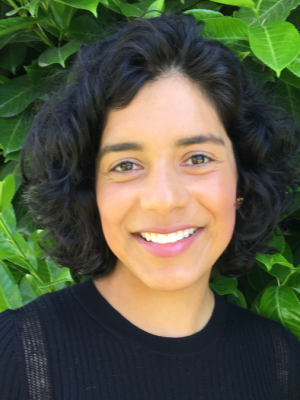
Magali Blanco, PhD
About
Magali Blanco received her PhD in environmental health and MS in occupational and environmental exposure science from the University of Washington, and a BA in biology from Lewis & Clark College. Blanco’s research applies quantitative, data-driven methods to study how environmental exposures affect health. Her work focuses on air pollution exposure assessment, brain health and health equity.
Her projects have included leading mobile monitoring campaigns to characterize population exposures to otherwise poorly measured pollutants. She has also developed air pollution exposure prediction models for use in health studies. Her recent work focuses on how air pollution may contribute to late-life dementia and neuropathologic changes related to Alzheimer’s disease and related dementias.
Education
- PhD, University of Washington
- MS, University of Washington
- BA, Lewis & Clark College
Mentorship
Available to mentor new Master's and Doctoral students in autumn 2027. Please follow the instructions on the How To Apply page.
Research
Air pollution and brain health: Investigating the link between air pollution exposure and brain health, including dementia and neuropathologic markers of Alzheimer’s disease and related dementias
Mobile monitoring: Designing and implementing mobile monitoring campaigns to measure population exposures to poorly characterized pollutants, such as ultrafine particles
Exposure modeling and assessment: Developing air pollution exposure prediction models; estimating long-term exposures for epidemiologic analyses
Environmental health disparities: Evaluating how environmental exposures and related health outcomes differ across populations
Publications
Selected publications
- Traffic-related air pollution and dementia incidence in the Adult Changes in Thought Study
- Characterization of Annual Average Traffic-Related Air Pollution Concentrations in the Greater Seattle Area from a Year-Long Mobile Monitoring Campaign
- Impact of Mobile Monitoring Network Design on Air Pollution Exposure Assessment Models
- Quantifying health benefits of sustainable aviation fuels: Modeling decreased ultrafine particle emissions and associated impacts on communities near the Seattle-Tacoma International Airport
- Ultrafine particles and late-life cognitive function: Influence of stationary mobile monitoring design on health inferences