Research Aims
The overarching objectives of this project are to:
- Adapt and pilot a child lead exposure risk survey and messaging protocol for the urban Sub-Saharan Africa context
- Evaluate two implementation strategies that both start with providing a child blood lead test and immediate result
- Lead risk reduction messages delivered immediately to parents in the clinic
- Immediate risk reduction messages in the clinic AND a follow-up home visit that includes an observational checklist of risk factors and tailored risk messaging
- Evaluate barriers to lead intervention at individual and structural levels
Approach
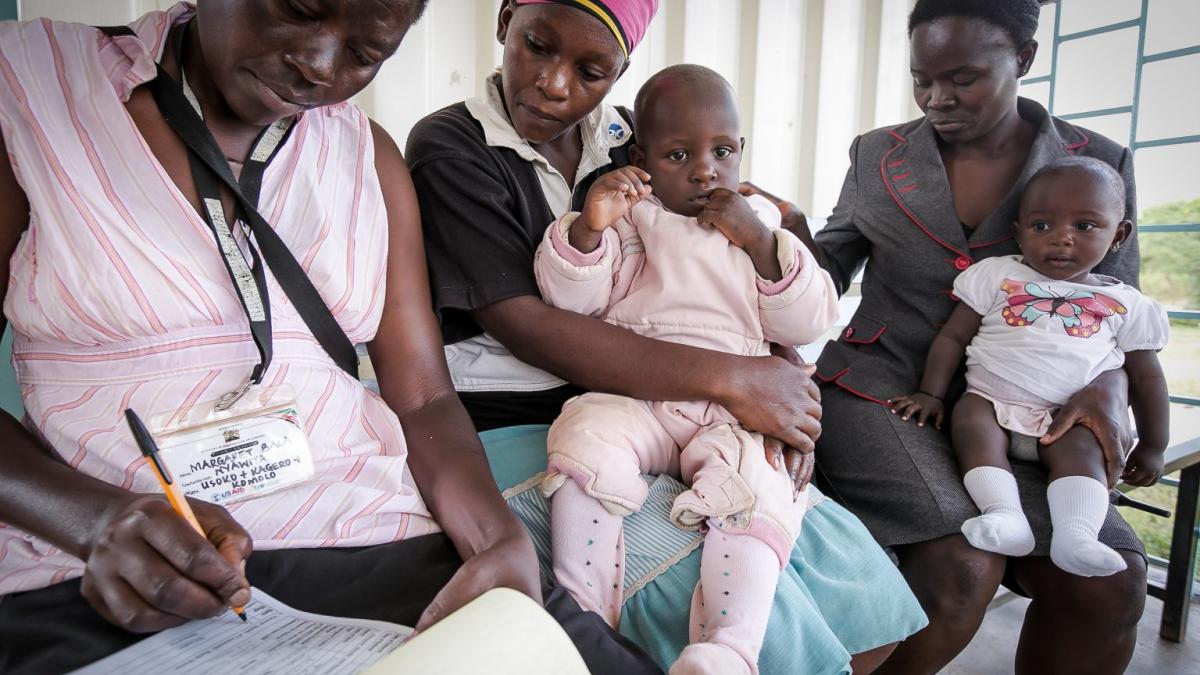
Pilot: LEIP will begin with a pilot project using an existing cohort of Nairobi parents and their children. Children coming to a participating clinic for an appointment will be offered enrollment in the project and their blood lead level (BLL) will be tested. All caregivers will receive basic lead risk reduction messaging. If the child has a low BLL (<5ug/dL), they will be exited from the project. If they have a higher BLL (≥5 ug/dL, within a month, they will receive a home visit from research staff. Staff will do household lead testing and provide tailored messages to the caregiver(s) about lead risk and mitigation. Caregivers will participate in an in-depth interview to collect information about the understandability and acceptability of the lead risk and mitigation messages. Six months later, researchers will collect another BLL from the child, and caregivers will complete a questionnaire asking about their recall of the messages from the previous home visit and any behavior changes they have made related to lead risk mitigation.
Randomized control trial: After the research materials are refined using lessons learned from the pilot experience, researchers will conduct a randomized controlled trial. They will recruit parent-child pairs with children between 12-72 months of age who are coming to a Nairobi clinic to receive routine well-child care. At enrollment, the child will receive a blood lead level test. All caregivers will be interviewed using a brief risk factor survey on potential lead exposure risks and receive risk reduction messages. For children with BLL < 5 ug/dL, the result will be provided to the caregiver, along with post-test messaging on reducing lead exposure. Children with a low BLL will then be exited from the study. Children with BLLs ≥5 ug/d will be eligible for the trial. Our goal is to enroll 100 children with BLL ≥5 ug/dL; we anticipate screening up to 1500 children to attain this.
Caregivers of children with BLL ≥5 ug/dL will be randomized into two groups. One group will receive only the in-clinic messages and the second group will receive those messages and also receive a home visit within two weeks of the initial clinic visit. Researchers will complete a home observation checklist to identify and discuss features of the home environment that might influence lead exposure and reinforcement of messaging on exposure reduction based on the home observations.
Both groups of randomized caregiver-child pairs will receive 3- and 9-month follow-up visits and BLL re-checks. Caregivers will complete standardized questionnaires to assess their recall of risk factors identified at the initial clinic visit and their uptake and implementation of exposure risk reduction recommendations. A subset of participants will be recruited to participate in semi-structured interviews to evaluate participants’ levels of understanding and acceptability of the survey. Interviews will be administered in the language of the caregiver’s choice. We want to evaluate whether the in-home visit is a necessary part of lead risk reduction efforts in Sub-Saharan Africa or if a more sustainable and affordable in-clinic message is sufficient.
Innovations
- LEIP is the first program to implement community-wide lead surveillance within routine care at health clinics in Sub-Saharan Africa.
- This will be the first study in a low/middle income country of child screening and follow-up for lead exposure using an implementation science framework.
- To strengthen training on lead exposure in medical and public health education in Kenya and low/middle income countries more broadly, this project is embedded within an academic partnership linking pediatric and environmental health specialists connected to training programs at the University of Nairobi.