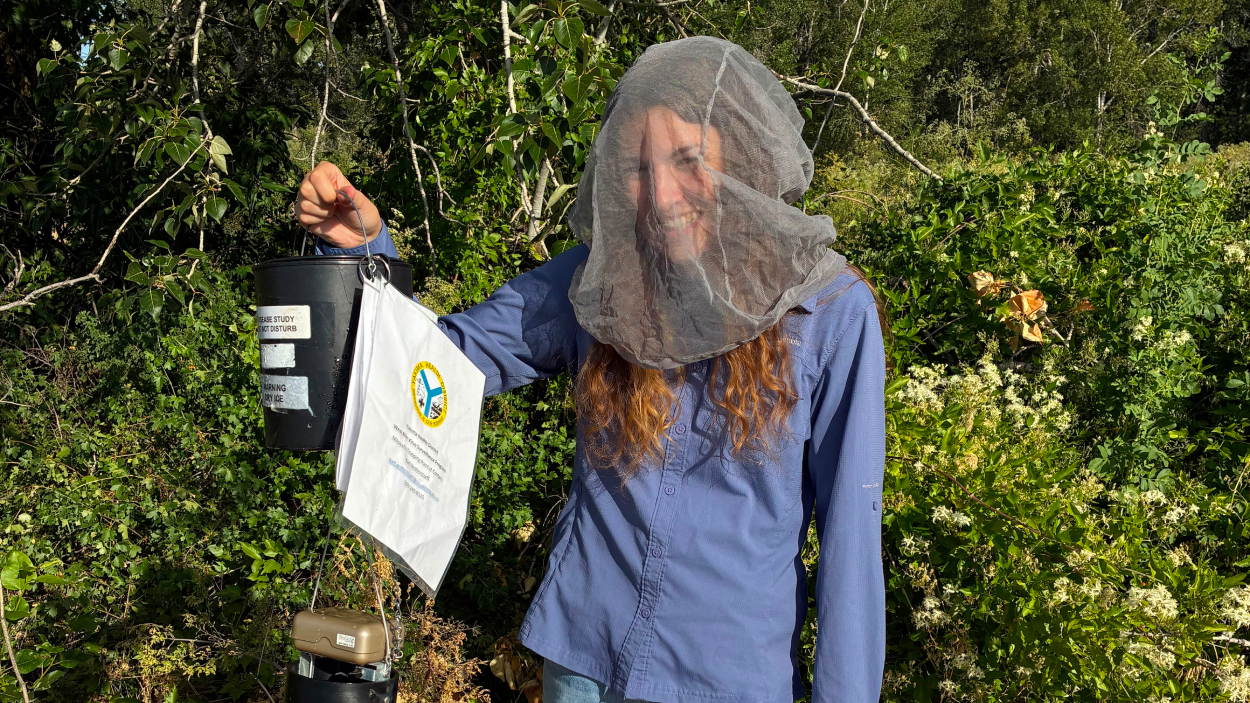
Being an environmental health officer in the Yakima Health District is like the opposite of being Bill Murray's character in "Groundhog Day." On one morning you might be responding to a salmonella outbreak in a restaurant, and on the next a contaminated backyard well or a case of West Nile virus.

Payton Miksch
BS, Environmental Public Health
Hometown
Seattle, WA
Internship with
Yakima County Health Department Environmental Health Division
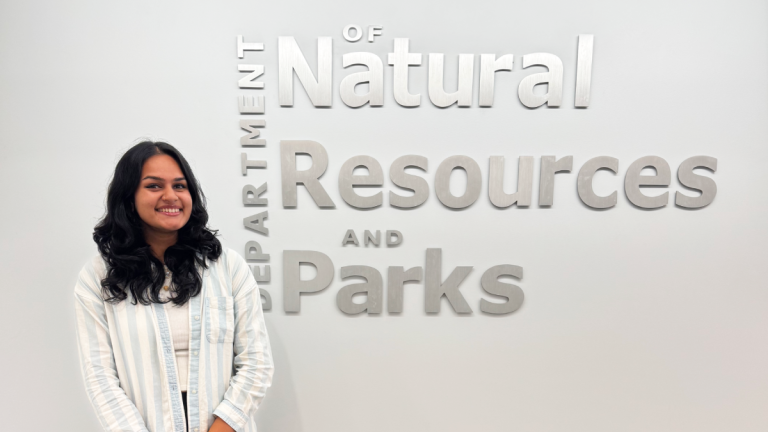
“You never know what’s going to happen. I think that’s the exciting part of it,” said Payton Miksch, an environmental public health major at the UW who is interning with the health district’s environmental health division this summer through a Hatlen Scholarship. “There are so many different types of situations you can be put in. That was interesting to me because I want to do a lot of different things in my career.”
The scholarship, which honors UW Department of Environmental & Occupational Sciences (DEOHS) Associate Professor Emeritus Jack Hatlen, funds summer internships for DEOHS students working in rural areas of Washington state.
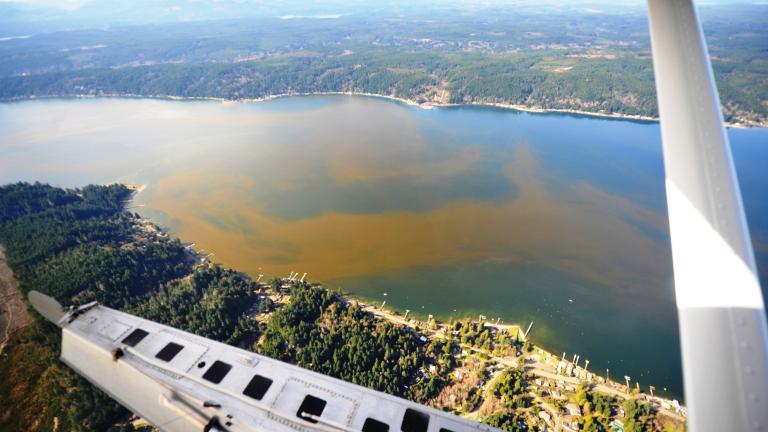
During her internship, Miksch trapped mosquitoes to be tested for West Nile virus and monitored local waterways for harmful algal blooms. She also created flyers to provide private well owners with guidance on preparing for floods, and a web page to provide tips on disposing hazardous household waste.
She spent many days in the field shadowing environmental health officers during their inspections of food, wells, pools, septic tanks, camps and landfills. And she observed how they work with the health department’s communications team to get the word out during a crisis, like that salmonella outbreak.
“It’s a team of nine doing all these environmental inspections for the whole county,” she said. “In rural health, they do all of the things.”
Preserving clean water
Miksch, a rising senior, started college at Western Washington University with a focus on marine science. But she quickly realized she wanted to pursue a more people-oriented field of study.
When she transferred to the UW, she found her ideal mix of water and people in environmental public health.
This summer, she has seen first-hand how environmental health officers protect water quality around Yakima County. She shadowed officers on well inspections for maintenance and risk of contamination. And she learned how the team provides testing and treatment options for well owners dealing with nitrate contamination in the agricultural Lower Yakima Valley and with toxic “forever chemicals” in East Selah, Washington. These per- and polyfluoroalkyl substances (PFAS) originated from firefighting foam at the nearby U.S. Army Training Center.
The experience has shaped her career plans, too: because both the nitrate and PFAS investigations were turned over to the Washington State Department of Ecology, she hopes to pursue a career there eventually.
Strengths and surprises
Shadowing environmental health officers also helped her identify her natural strengths and areas where she didn’t thrive. It came as a surprise that she enjoyed septic tank inspections — because the work captured her interest in geology.
She was also excited to use and expand her Spanish language vocabulary while conversing with the many Spanish speakers in Yakima County, learning new “environmental health lingo.”
On the other hand, she realized that she didn’t enjoy the more contentious environment of food inspections.
“While it’s essential for public safety, having to tell people they have to throw away hundreds of dollars of food because it’s not at the right temperature — I’ve learned that’s not for me,” she said with a smile.
A close-knit community
Miksch has found the UW DEOHS to be a haven amid the sometimes “chaotic” nature of the university at large.
“UW is such a big school, but I love how the department is such a tight-knit community,” she said. “Our advisers really show that they care about us and our careers.”
While learning with the same cohort over several years, her classmates have become friends.
“Everyone’s doing something different, but you’re all in the same boat — trying to find an internship, trying to find a career in a similar field, and sharing experiences too,” she said.