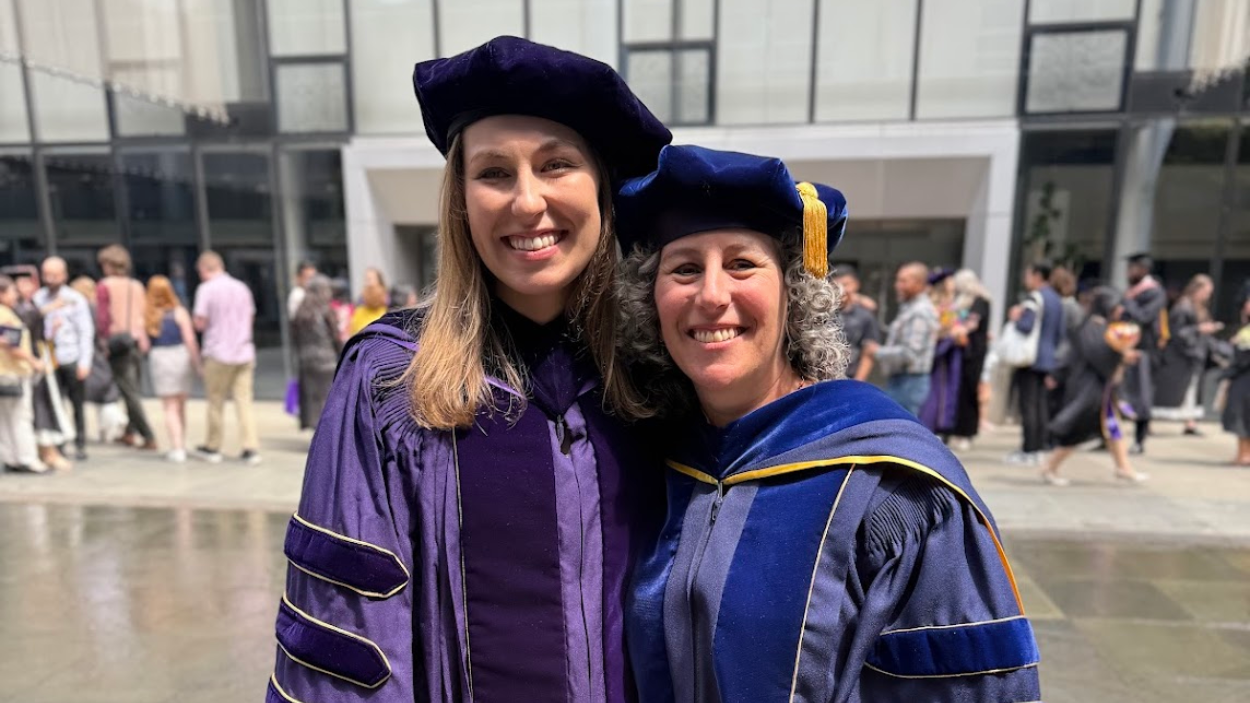
Rebecca Kann brings an engineer’s eye to investigating how water, sanitation and climate affect people’s health.
Rebecca Kann
PhD, Environmental Health Sciences
Hometown
Racine, WI
Future plans
Serving as an Epidemic Intelligence Service officer for the U.S. Centers for Disease Control.
"The goal of studying water and sanitation infrastructure is to shine a light on how important they are for health, so that policy and investments can most effectively create better hygiene and sanitation."
-Rebecca Kann
For her dissertation in the UW Department of Environmental & Occupational Health Sciences (DEOHS), Kann examined how children’s health was influenced by upgrades to the drinking water system in the city of Beira, Mozambique. In Beira, people only have access to piped water at certain times of day, and so they have to store it — increasing contamination and exposure to pathogens.
“Water storage is not an easy problem to fix, and the real way to solve that problem is to work with the utility to promote more consistent water flow,” she said, noting that her results sparked discussions with the city’s water utility, a partner in the study.
In the short term, Kann said, drinking water safety in Beira and similar communities could be improved by making sure to clean and cover water storage containers, and ideally by filtering the water or treating it with chlorine.
For her community-engaged research and service to the UW, Kann was recently named the 2026 DEOHS Outstanding PhD Student.
“Throughout her time in my lab, Dr. Kann demonstrated repeatedly her commitment to public health, her passion for research, her curiosity about science and her capacity for producing high-quality work,” said DEOHS Professor Karen Levy, Kann’s faculty adviser.
The human connection
Kann first became passionate about clean water as an undergraduate studying civil engineering, where she worked with an organization developing a drinking water system in rural Uganda.
“I got interested in the public health side of that work, and the human connection to the engineered systems that I was working on,” she said. That led her to study water, sanitation and hygiene — a field known as WASH — for her master’s and then to come to the UW for her PhD.
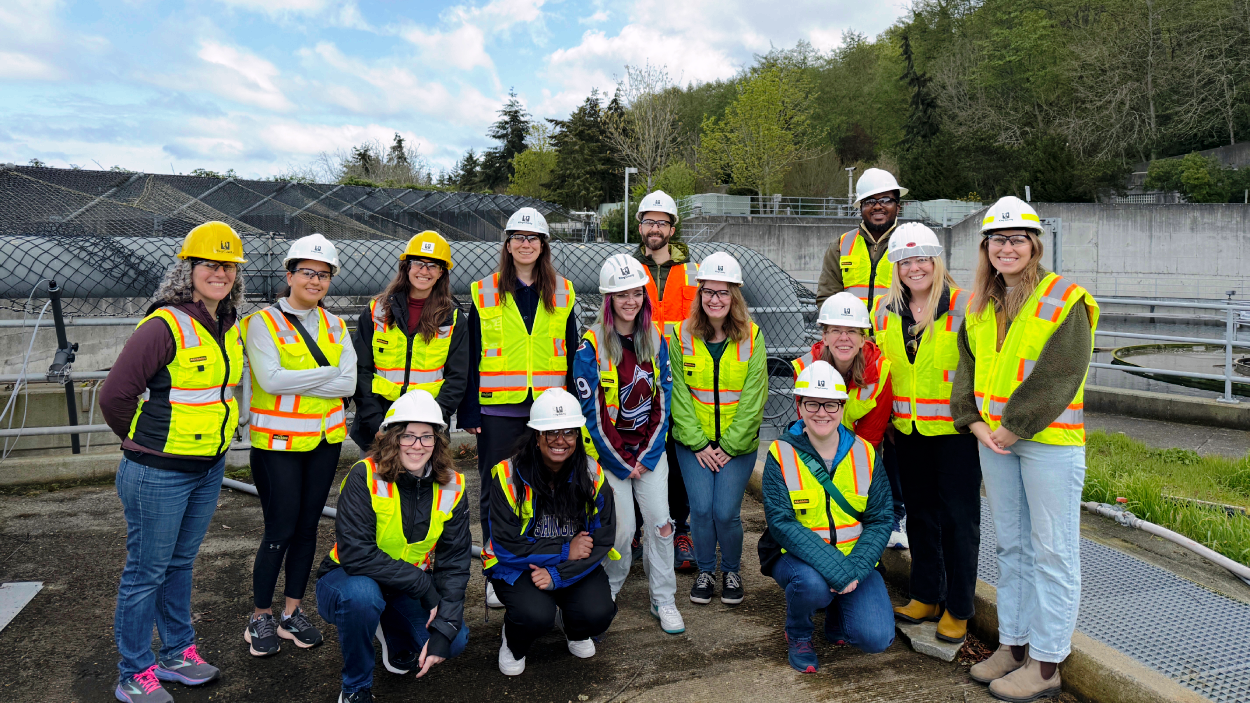
In DEOHS, Kann helped coordinate a WASH interest group, which Levy started as a way to bring together Seattle-based researchers and organizations in the field. In her final year, Kann organized a trip for the group to the West Point Treatment Plant, which processes most of Seattle’s wastewater.
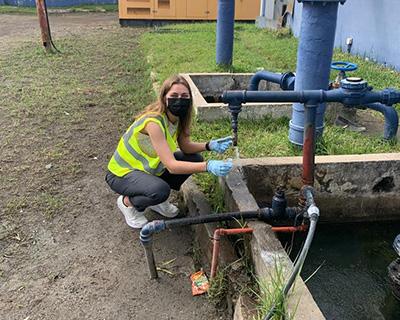
Kann also helped lead two important DEOHS institutions: the Student Advisory Committee, a graduate student organization which organizes events and helps students get oriented in the department, and the Works in Progress seminar series, where students, faculty and staff informally discuss their research.
“I was able to grow a strong community here, where everyone is working on such interesting things,” she said. “We’re all focused on environmental public health, but everyone has their own niche.”
Clean water and climate in Mozambique
Kann’s research was part of a larger project called the PAASIM study, which evaluates the impact of drinking water system improvements in Beira by assessing children’s gastrointestinal health and microbiomes. It’s led by Levy and Matt Freeman, an environmental health professor at Emory University, in partnership with researchers in Mozambique and the water utility in Beira.
“I feel very lucky to have been able to do that work, together with community members and collaborators in Beira, and the larger research team,” Kann said.
In 2019, a major cyclone hit Beira, and the coastal city contends with extreme weather each year. Part of Kann’s thesis explored how water access and disease patterns were influenced by seasonal changes.
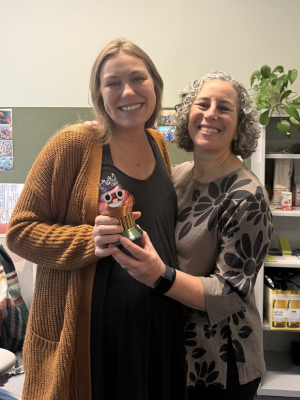
She found that some pathogens were more prevalent in the rainy season than the dry season. What’s more, during extreme rainfall events, people using the upgraded water supply system were more protected from pathogenic disease than those using a part of the system without those upgrades.
“The findings really helped the community and water utility understand when to prioritize interventions so that people are most protected during extreme weather events,” Kann said.
Becoming a disease detective
After graduating last fall, Kann shifted her focus to research connections between harmful algal blooms and dementia as a postdoctoral researcher with DEOHS faculty members Joan Casey and Marissa Childs.
This month, she’s starting a new job for the U.S. Centers for Disease Control as an Epidemic Intelligence Service officer stationed at the Washington State Department of Health.
“They informally call us disease detectives, but the goal is to be first responders to any outbreaks or epidemics in the U.S.,” she said. “I think it’ll be a good way to flex my muscles and test all the epidemiological and biostatistical skills I’ve gained from being in this department.”