Last year, when Lianne Sheppard began planning a symposium on the public health impacts of glyphosate, the world’s most widely used pesticide, she knew it would be controversial. But since then, it’s only gotten more so.
Once claimed to be safer than table salt by Monsanto, the company that first marketed the chemical as the weed-killer Roundup, glyphosate was classified as “probably carcinogenic to humans” by the World Health Organization’s International Agency for Research on Cancer in 2015. Soon after that, however, the U.S. Environmental Protection Agency concluded that it was unlikely to cause cancer.
In the past year, the “weed-killer wars” have heated up. Last December, an influential paper that claimed glyphosate did not harm human health was retracted by its publisher, because of findings that it had been ghostwritten by representatives of Monsanto. In February, President Donald Trump issued an executive order that would increase production of the herbicide, angering many, including members of the Make America Healthy Again (MAHA) movement.
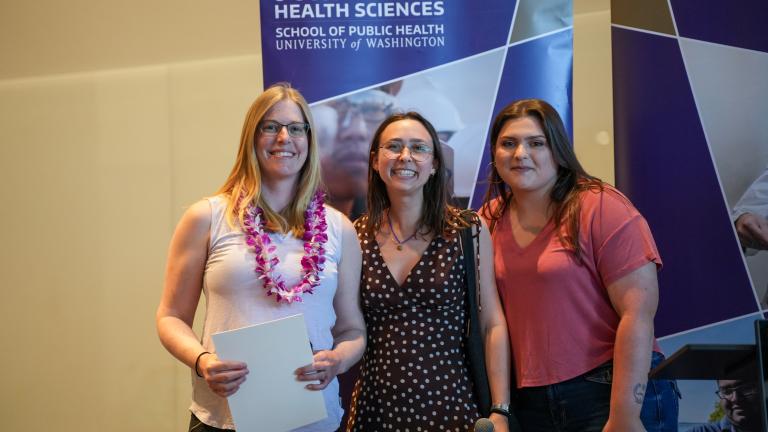
Then, in March, Sheppard’s Seattle Glyphosate Symposium gathered about 70 participants in person and hundreds online — including leading scientific experts on glyphosate, lawyers, environmental advocates, journalists and industry representatives.

“The timing was special, because with everything happening in the legal and political realms with respect to glyphosate, there’s been more and more interest by the general public,” said Sheppard, Rohm & Haas Endowed Professor in Public Health Sciences in the UW Department of Environmental & Occupational Health Sciences (DEOHS) and the UW Department of Biostatistics. “The caliber of the symposium speakers and organizers was incredibly gratifying, as well as their dedication to public health.”
Experts at the meeting formulated and published an expert statement on the public health impacts of glyphosate — concluding that “glyphosate can cause cancer,” with the strongest evidence linked to non-Hodgkin’s lymphoma. They also called on public agencies worldwide to regulate the chemical and protect people’s health.
Gauging glyphosate exposure
People who work directly with glyphosate, including those in agricultural and landscaping occupations, are more highly exposed to the chemical and thus at greater risk for health hazards. But even lower exposure to the chemical through diet, dust and other routes carries risk, with children, infants and fetuses most susceptible. It is estimated that 70% to 80% of the U.S. population excrete glyphosate in their urine, suggesting widespread exposure.

“It’s a low-level, ubiquitous exposure that a lot of people face,” Sheppard said. “The excess cancer risk from this low-level, everyday exposure is estimated to be 56 in a million. Assuming there are 300 million people exposed in the U.S. by eating a non-organic diet, that’s 16,800 extra cancers. The public health implications are huge.”
Glyphosate use dramatically increased in the 1990s with the advent of “Roundup ready” crops genetically modified to thrive in tandem with the chemical. It is also widely sprayed on crops before harvest, particularly wheat, oats and legumes, to dry them out.
At the symposium, attendees presented findings about glyphosate’s impact on health outcomes including cancer, kidney, liver, reproductive, endocrine and neurological effects. They also discussed litigation and corporate influence over science, and finally how people can reduce their exposure to the pesticide.
An unexpected path
Sheppard, an expert on the health effects of air pollution, became interested in glyphosate unexpectedly. In 2016, the EPA invited her to join a scientific panel reviewing the carcinogenic potential of the chemical. It was after the agency had removed another scientist from the panel, Sheppard believes, at industry’s recommendation.
An avid organic gardener, she agreed to join the panel. “I had always thought glyphosate was okay to use in my organic garden, and I thought, here’s an opportunity to learn more about it,” she said. But when she reviewed the evidence as a biostatistician, she was struck by the links to cancer.
3 ways to reduce your glyphosate exposure
1. Choose organic foods where possible. In particular, choose organic options for oats, wheat and legumes like chickpeas, because these conventional crops are sprayed before harvest.
2. Avoid using pesticide products where possible. If you choose to spray them, wear chemically resistant gloves and protect your skin, eyes and mouth from exposure.
3. Avoid areas that have been sprayed with pesticides. If you live in an area where pesticides are routinely sprayed, increase wet mopping and dusting with a wet cloth to keep dust levels low.
The experience was “quite eye opening from both a scientific and regulatory perspective,” she said. “I’m convinced that EPA decided the conclusion they were going to reach, and then they fit the evidence to their conclusion, which is backwards from what they should have done.”
In response, she and other researchers, including some on the panel and a DEOHS PhD student, examined the health impacts of glyphosate for those most heavily exposed to the chemical. They found that glyphosate exposure confers a 41% greater risk for non-Hodgkin lymphoma.
The symposium’s impact
In April, the U.S. Supreme Court heard arguments in a case that could grant immunity to Bayer, who now owns Monsanto and the Roundup brand, from lawsuits by people claiming health damage from exposure to the pesticide. Their decision is expected in late June or July.
The Seattle Glyphosate Statement has been signed by 50 symposium attendees, ranging from prominent scientists, including Dr. Kurt Straif of Boston University and Tracey Woodruff of Stanford University, to an influential voice in the MAHA movement, Kelly Ryerson, known on Instagram as Glyphosate Girl.
The statement is already having impact beyond scientific circles: it became the basis for a friend-of-the-court brief to the Supreme Court, and Ryerson recently brought it to a meeting at the White House.
“I am hopeful that our symposium will push regulators to better protect public health,” Sheppard said. “And in the meantime it has allowed many new opportunities to communicate the latest scientific evidence to the public and to convey strategies individuals can use to reduce their exposure.”