
Here you can:
Tackle urgent
health challenges
impacted by
climate change
Harness your passion for improving public health.
At DEOHS, you can:
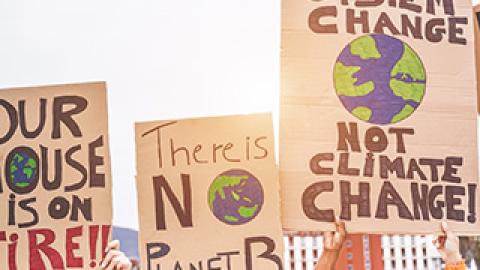
Study how public health helps people, communities, policymakers, and practitioners adapt to a changing climate.
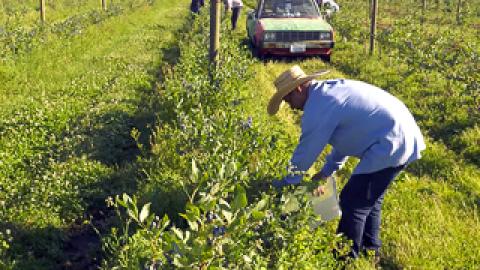
Investigate the risks outdoor laborers face with rising temperatures.

Identify and develop adaptation and intervention strategies to reduce the impact of climate change on human health.
Why study Climate Change and Health?
The health impacts of climate change are a growing area of interest for research and practice. Focusing your studies in this area will allow you to graduate from DEOHS with specific knowledge and experience of risk assessment, how to assess and manage exposures to environmental hazards and core principles of toxicology.
As a student focusing on Climate Change and Health, you will:
- Take common core courses introducing foundational concepts and skills, including risk assessment, management and communication; assessment and management of exposures to environmental hazards; core principles of toxicology; and how climate change and its impacts affect human health.
- Learn how climate change impacts the linkages among human and environmental health; and how public health helps people, communities, policymakers and practitioners adapt to and mitigate these effects. Choose additional courses that align with your interests, such as disasters, nutrition, policy, and environmental justice and equity.
- Complete a culminating experience (thesis or dissertation) showcasing your ability to integrate the skills you have learned to address an environmental or occupational health problem.

"I chose DEOHS because of the department's strong focus on solutions-based, interdisciplinary climate and health research. The department has helped me build relationships with academic, government and nonprofit partners who help us conduct research projects that directly address climate-related threats to Pacific Northwest communities."
Claire Schollaert, PhD, 2023
Read moreStudent research
Riley Ann Achtemeier
Developing and Validating a Trust in Public Health Authorities Scale for Extreme Heat Guidelines
MS Thesis, 2025
Faculty: Resham Patel
Joseph Teresi
Environmental Public Health Surveillance of Freshwater Harmful Algal Blooms in Washington State Using Drone Technology
MS Thesis, 2024
Faculty: Tania M Busch Isaksen
Anisha Azad
The Effects of Extreme Weather Exposure on People Experiencing Homelessness in Seattle
MS Thesis in Environmental Health, 2023
Faculty: Edmund Y. W. Seto
Our faculty and research

There’s how we use our energy, how we use our land, how we produce our food, how we get water. All of these are interrelated and are affected by climate change.
Joan Casey, PhD
DEOHS Associate Professor
Research spotlight
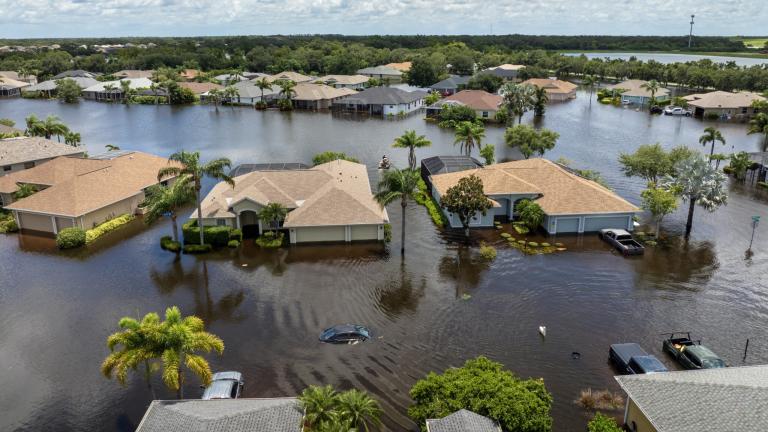
UW researchers help forge new roadmap for future climate assessments
DEOHS faculty members Jeremy Hess and Kristie Ebi author guidance on climate-related health and air quality

Protecting Washington workers in the heat
Xinyuan Hao, 2026 DEOHS Outstanding Master’s Student, evaluates heat risks for outdoor workers

Sustaining food systems at the UW and beyond
DEOHS undergrad Angelina Durbin named to the Husky 100 for creative food recovery efforts on campus
Career pathways
Our Climate Change and Health graduates work in the public, private, nonprofit sectors and in academia. Recent DEOHS graduates work as:
- Postdoctoral scholar at UCLA Fielding School of Public Health
- Research coordinator at UW Center for Disaster Resilient Communities
- Communications specialist at Public Health-Seattle & King County
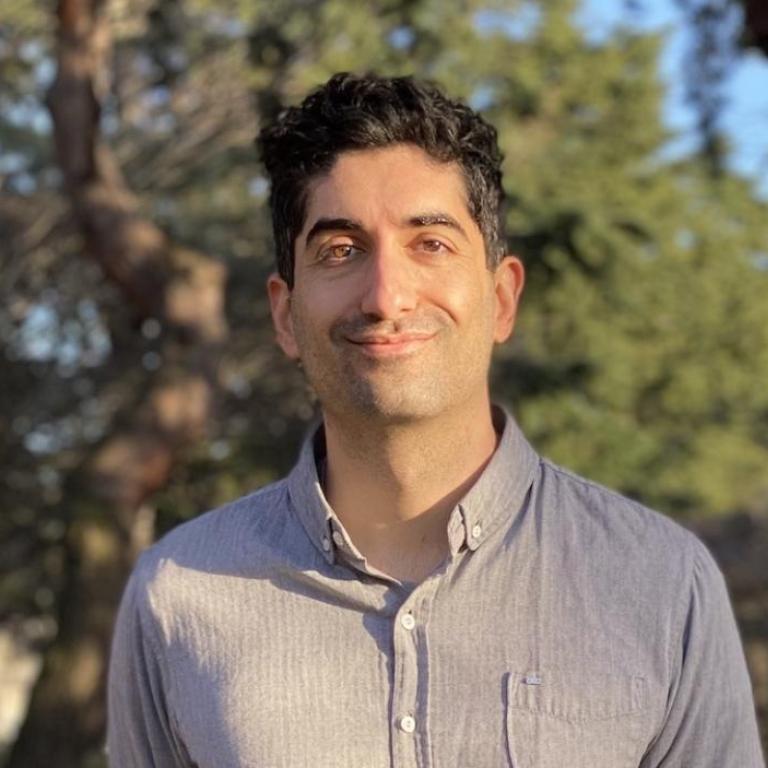
"The mentorship and training I received at UW DEOHS was key to preparing me for my current research-oriented career path. I gained a variety of skills that ultimately qualified me to advance to my current focus in environmental reproductive epidemiology. I feel grateful to be able to work in this exciting field."
Ryan Babadi, PhD, 2020
Read more