The Hazardous Waste Management Program in King County is focused on the places and products that people encounter every day. Program staff are deeply devoted to rooting out the incidental toxic exposures that could be hiding in our homes, our gardens, our workplaces, our auto repair shops or our hair salons.
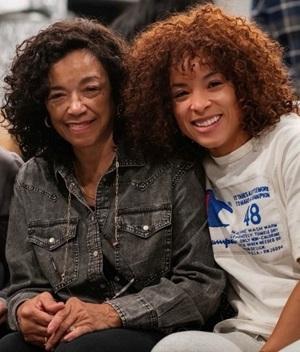
The wide reach of these efforts often means that the Program’s work can’t help but touch on staff members’ personal lives. That is certainly the case for Haz Waste Program research intern Dawn Johnston.
Dawn was practically raised in a hair salon: “My mom has been an award-winning master barber and stylist for, like, almost 50 years,” she says. “She's owned a salon, she's developed products. So, I've helped her throughout my life.”
Because Dawn has been a helping hand for her mother, Yolonda Carwell, and her business for as long as she can remember, she’s extremely familiar with the myriad of products floating around in a typical hair salon, particularly products marketed to Black women and people of color.
Now, Dawn has a master’s degree from the Department of Environmental & Occupational Health Sciences (DEOHS) in the UW School of Public Health. While science has become her professional pursuit, her interest in hairstyling hasn’t waned.
Are synthetic hair braiding products toxic?
In 2025, she came across a Consumer Reports study that found dangerous chemicals like lead, arsenic and mercury in every popular synthetic hair braid product tested. The study raised questions for Dawn: Are there specific characteristics of these products that could make them more dangerous? Do factors such as price, color, or type of fiber indicate that a product is more likely to be toxic?
“I also wear hair extensions myself sometimes,” she explains. “So, I was curious as a user. And I was a toxicology student, so I had these multiple components that led to a perfect project.”
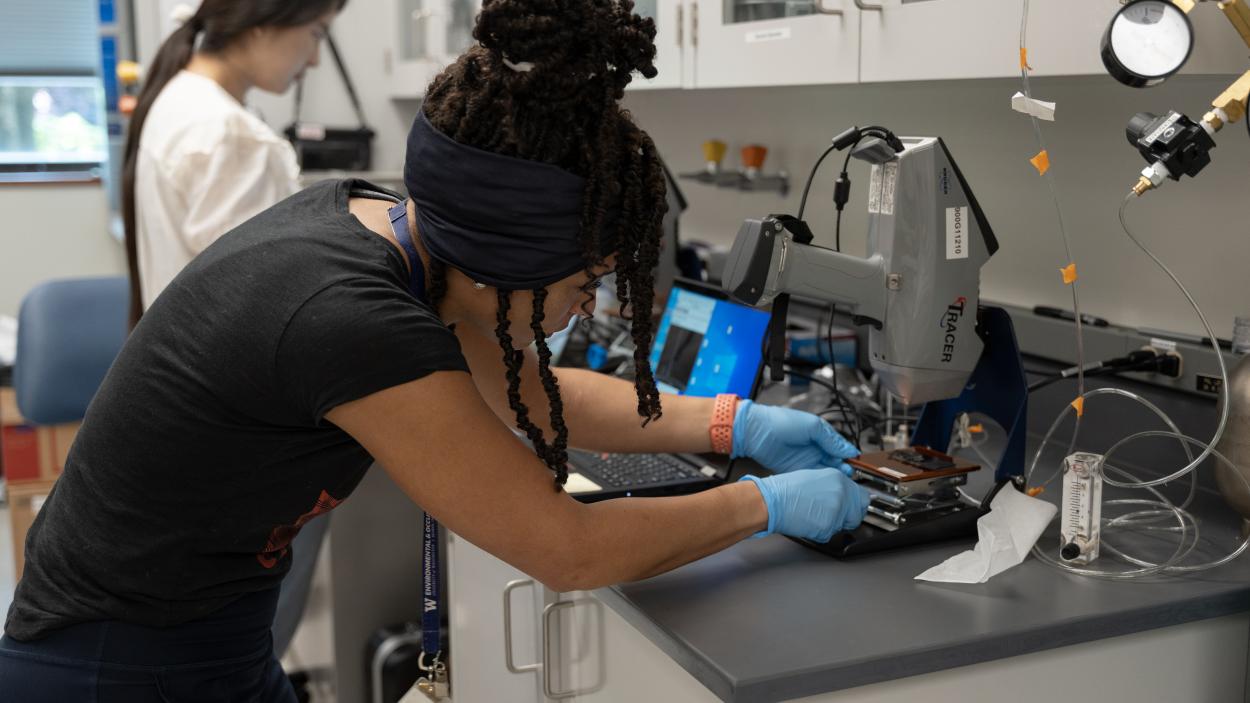
In coordination with advisors at the UW and the Haz Waste Program’s research team, Dawn developed a study using the Program’s handheld X-ray fluorescence (XRF) analyzers and laboratory analysis to examine the lead content of various hair braiding products.
Previously, Dawn had learned how to use XRF analyzers — a technology that uses X-rays to measure the chemical composition of materials – during an earlier project that tested consumer products for signs of “forever chemicals,” like PFAS, with her UW mentor, DEOHS Assistant Professor Diana Ceballos, and Trevor Peckham, an environmental scientist on the Haz Waste research team and a DEOHS affiliate assistant professor.
Detecting lead in synthetic hair extensions
Using both XRF and laboratory analysis, Dawn detected lead in 10 of the hair braid products she tested. An abstract for Dawn’s research project can be viewed here.
What you can do
Want to find safer beauty products?
These sites can help:
EWG Skin Deep, Black Beauty Project or COSMOS Standard (for natural/organic products).
In the future, Dawn hopes more synthetic hair braiding products are tested for toxic chemicals. She would also like to see more studies looking into how various practices by stylists and users of hair extensions might influence the level of exposure to chemicals in those products.
In general, she says consumers deserve to know more about the hair products they buy in stores or use in salons.
“I think the products that are testing as safer are just going to win, and that’s going to create new drivers towards transparency,” Dawn says. “A lot of beauty product sellers might think we don't care about safety, but it's not that we don’t care. It’s just that we don't know.”
Adapted from the original story, which appeared on the Hazardous Waste Management Program in King County website.