
Here you can:
Discover the links
between the health
of people, animals
and the environments
we share.
Harness your passion for improving public health.
At DEOHS, you can:
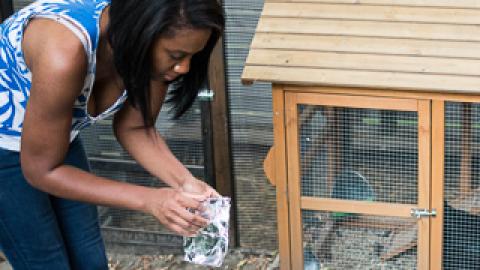
Evaluate and improve safety practices to protect the health of veterinary workers (the PhD dissertation of Heather Fowler, pictured above)

Investigate how antibiotic-resistant E. coli is ending up in the waste of river otters and other marine mammals.

Collaborate with international partners to detect viruses that can be transmitted from animals to humans.
Why study One Health?
One Health is a transdisciplinary approach to health issues affecting humans, animals and the rapidly changing environments we share. One Health specialists look at a range of issues—from emerging zoonotic diseases and antimicrobial resistance to climate change and food production—through the lens of creating a healthy coexistence between humans and animals in sustainable ecosystems.
Why study One Health?
One Health is a transdisciplinary approach to health issues affecting humans, animals and the rapidly changing environments we share. One Health specialists look at a range of issues—from emerging zoonotic diseases and antimicrobial resistance to climate change and food production—through the lens of creating a healthy coexistence between humans and animals in sustainable ecosystems.
As a student focusing on One Health, you will:
- Take common core courses introducing foundational concepts and skills, including: risk assessment, management and communication; assessment and management of exposures to environmental hazards; core principles of toxicology; and how to use a One Health approach to address complex challenges.
- Learn about the linkages among human, animal and environmental health; how climate change is impacting those connections; and the unique occupational health risks faced by workers who come in contact with animals. You will also choose additional courses on topics that align with your interests, such as antibiotic-resistant bacteria and genes, the microbiome and recognition and control of health and safety hazards in industrial settings.
- Complete a culminating experience (thesis or dissertation) showcasing your ability to integrate the skills you have learned to address an environmental or occupational health problem.
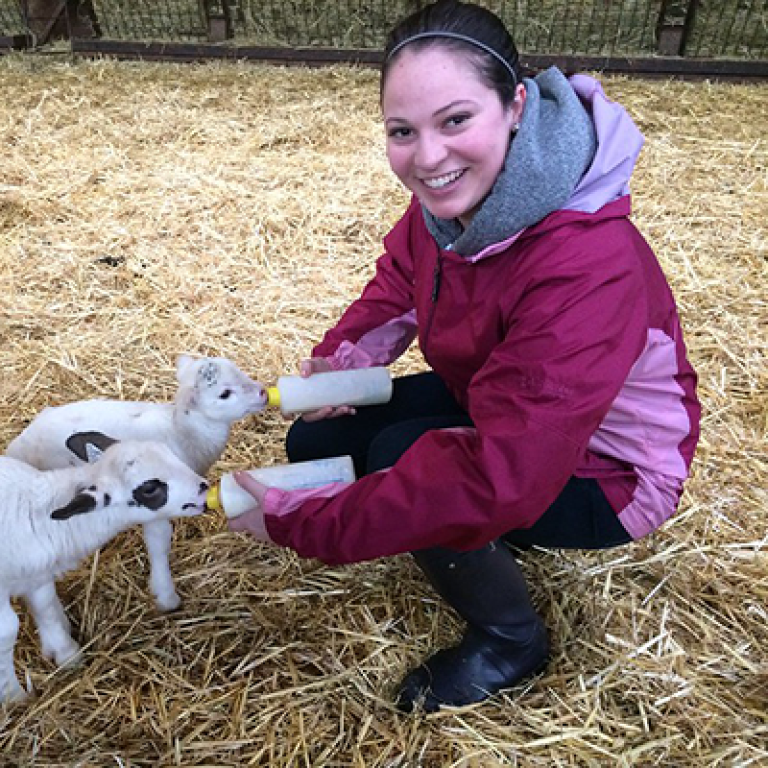
When I was researching graduate schools, the One Health program at UW stood out to me. I’ve been impressed with the support I receive from my mentors and the availability of research funding.
Madeline Benoit, MPH
Student research
A. Mallory Thomas
A One Health approach to Land Tenure and Routes of Zoonotic Disease Exposure for Pastoralists in Marsabit County, Kenya
MS Thesis, 2024
Faculty: Julianne Meisner
Rachel Ziejka
Hunting Dogs as Sentinels for Avian Influenza: Examining Zoonotic Disease Transmission Risk and Human-Canine Interactions
MS Thesis, 2024
Faculty: Marissa Baker
Shannon Cassel
Antimicrobial Usage in Bovine Veterinary Medicine in Washington State
MS Thesis, 2024
Faculty: Erica Fuhrmeister
Our faculty and research

One Health has already achieved remarkable progress in the control of zoonotic diseases, but it often prioritizes the life of humans over other living beings and neglects the environmental domain. Now is the time to move One Health forward by addressing these limitations, and broadening One Health to include the political, cultural, social, historical, and economic contexts that shape the health of multispecies collectives.
Dr. Julianne Meisner
DEOHS Adjunct Assistant Professor
Director, UW Center for One Health Research
Research spotlight
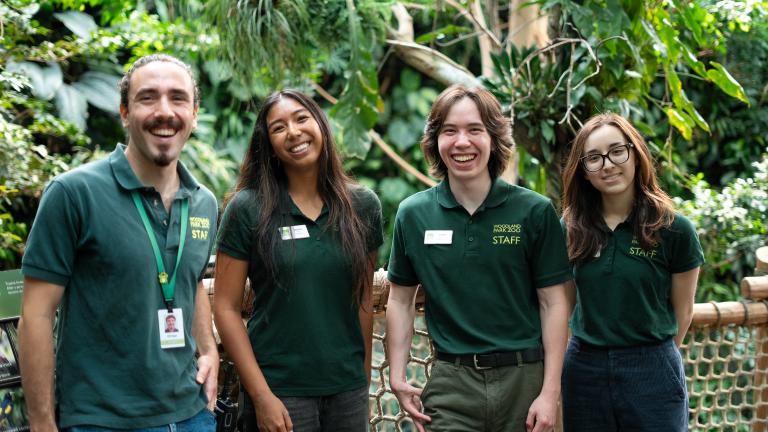
Strengthening safety and sustainability at the zoo
DEOHS students advance worker health and sustainability as interns at Woodland Park Zoo
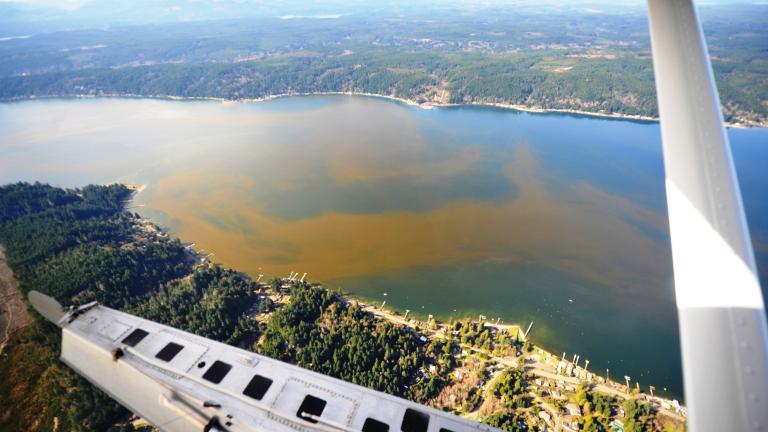
Confronting “wicked problems” in public health
A class for new DEOHS graduate students highlights how to make headway on 7 complex challenges in environmental health

Warming climate drives surge in dengue fever cases
Dengue incidence could rise 76% by 2050 in parts of the world, according to new study by DEOHS faculty member Marissa Childs and colleagues
Career pathways
Our One Health graduates pursue careers in environmental health practice, agricultural safety, health care settings, wildlife health, climate change, academic research or consulting. Recent DEOHS graduates work as:
- Researcher at the Luxembourg Institute of Health.
- Director, producer and public health at National Pork Board.
- Tribal Epidemiology Center program manager at the Urban Indian Health Institute.
- Zoonotic and vector-borne disease health services consultant to the Washington Department of Health's Office of Communicable Disease Epidemiology
- Environmental stewardship and policy lead at the Northwest Dairy Association/Dairygold
- Medical school

The One Health focus in DEOHS allowed me to customize my experience by focusing on animal and human health in the context of disaster preparedness.
Brianna Willis
Senior Research Specialist in the Safety and Security division of CNA,
a nonprofit research and analysis organization.