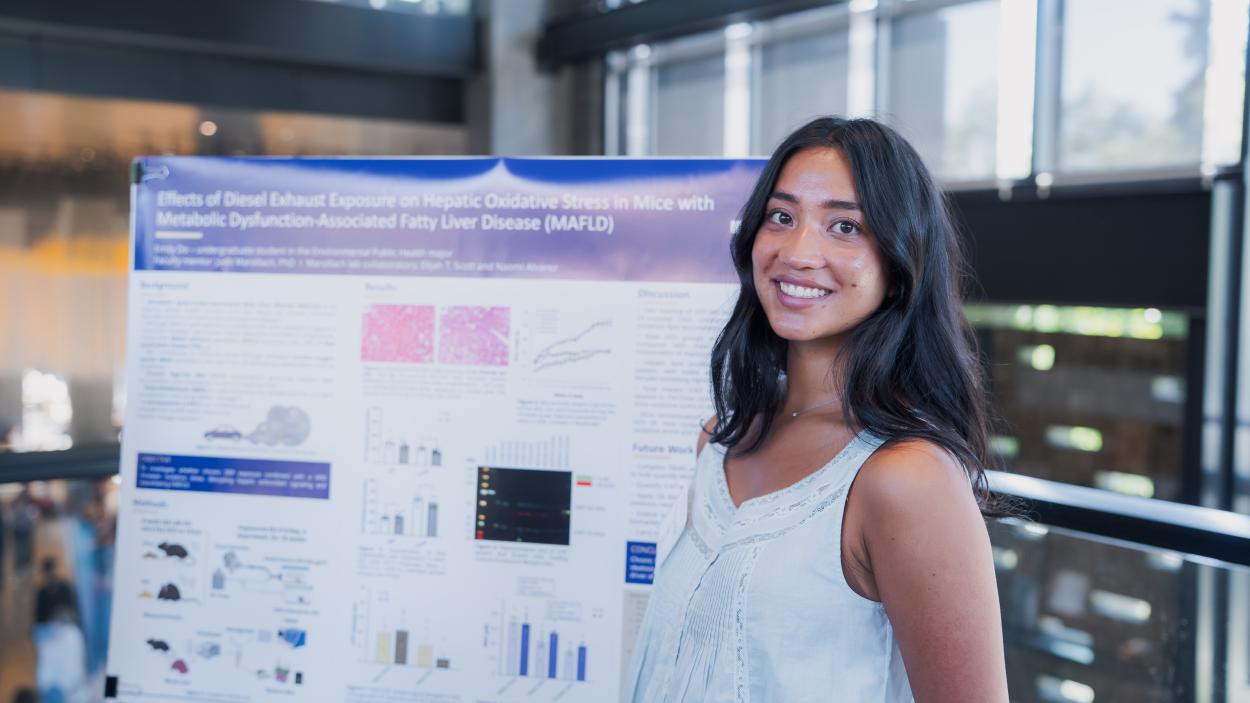
When Emily Do first came to the UW from her hometown of Oakland, California, she was struck by the greenery of her new surroundings on campus — but something troubled her.
Emily Do
BS, Environmental Public Health
Hometown
Oakland, CA
Future plans
Becoming a physician in palliative medicine
"I can’t stress enough how incredible this department has been for me, and how well prepared I feel for whatever comes next."
-Emily Do
“I really didn’t like that there was litter on the ground,” she said. “I felt that we students owed it to each other to keep it clean, and that we had an onus to the land,” she said.
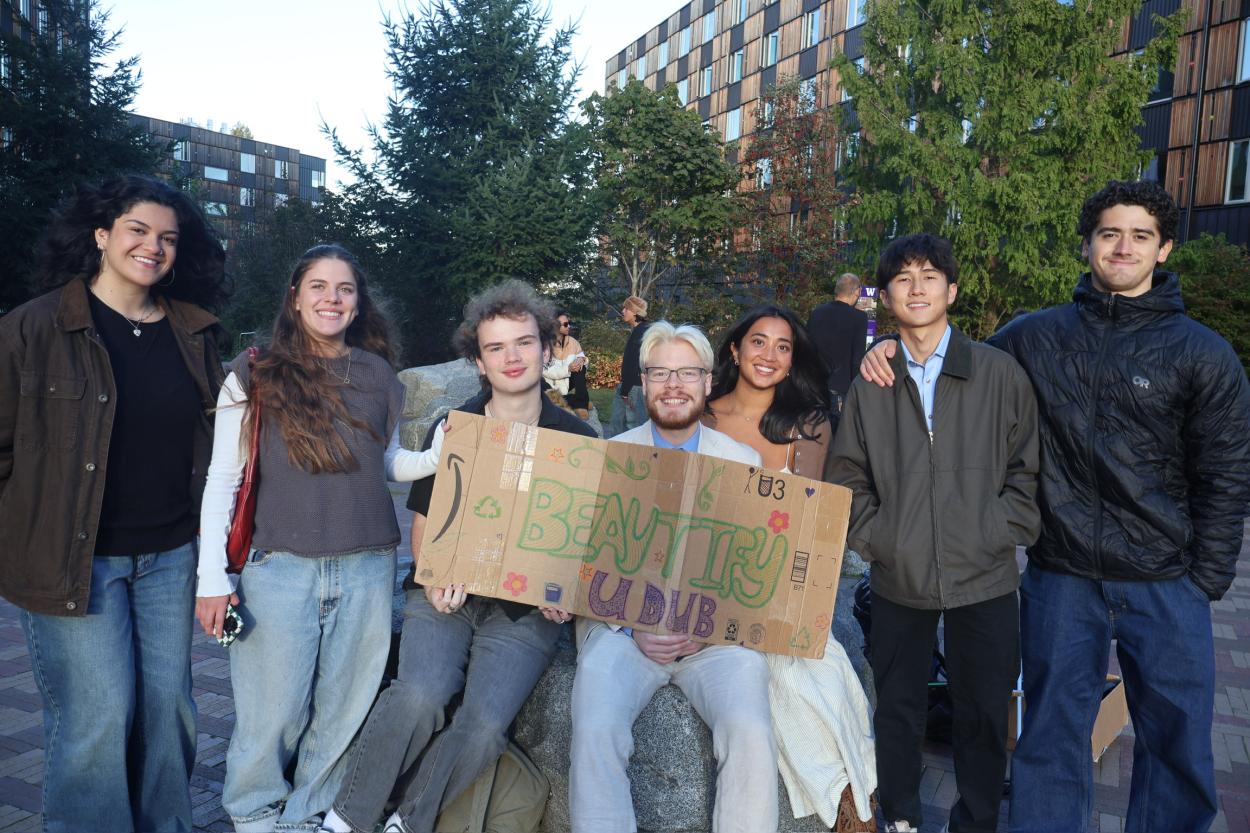
So she convinced her roommate and other students in her dorm to spend a half hour picking up trash around campus. It became a weekly tradition.
Since then, the group Do started, called BeautifyUdub, has mobilized more than 400 students in environmental cleanup efforts through hosting nearly 135 events on campus and throughout Seattle over the past four years. They have partnered with most of the university’s environmental student organizations, received sponsorship from the outdoor outfitter Cotopaxi, and hosted Washington State Representative Julia Reed for a visit.
“It’s taught me so much about leadership, management and community service,” Do said about the experience of leading the organization for the past four years. “I think it’s the thing I’m most proud of.”
Do and other members of BeautifyUdub recently won a Husky Sustainability Award for their efforts. And Do herself, who graduates this spring, was named the 2026 DEOHS Outstanding Undergraduate for these efforts as well as her deep engagement with environmental public health as a student, researcher and intern in the UW Department of Environmental & Occupational Health Sciences (DEOHS).
“Her work in community mobilization and coalition-building demonstrates her ability to translate environmental health values into meaningful public action,” said DEOHS Professor and Chair June Spector.
Drawing inspiration from "Silent Spring"
It was in a literature course at the UW that Do, a premed student, first got interested in environmental health. In the class, “Literature and Science,” she read Rachel Carson’s seminal account of pesticide toxicity in Silent Spring, and Terry Tempest Williams’ Refuge, a powerful investigation of her family’s history of breast cancer while living downwind of atomic testing sites in Utah.
“The class rewired my brain to draw connections between things that originally seemed unrelated,” Do said. “Once I found out about environmental health, I thought it was the most interesting thing.”
Since majoring in environmental public health, Do has conducted toxicology research with DEOHS Assistant Professor Judit Marsillach on the health hazards of diesel exhaust, and earned a spot in the prestigious National Environmental Public Health Internship Program, where she worked with the K-12 Schools division of Public Health – Seattle & King County.
She also spent a quarter pursuing global health training through the School of International Training in Geneva, Switzerland, where she researched the combined use of Western and alternative medical traditions in humanitarian aid.
How diesel exhaust affects the liver
In Marsillach’s lab, Do investigated the connections among exposure to diesel exhaust, a high-fat diet, and a condition called metabolic dysfunction–associated fatty liver disease, which causes fat to build up in the liver. She found that mice exposed to diesel exhaust, regardless of their diet, had higher levels of biomarkers indicating oxidative stress associated with fatty liver disease.
Notably, the amount of oxidative stress was higher in male mice than female ones. Do presented her results at undergraduate research symposia sponsored by the UW and the UW School of Public Health this spring.
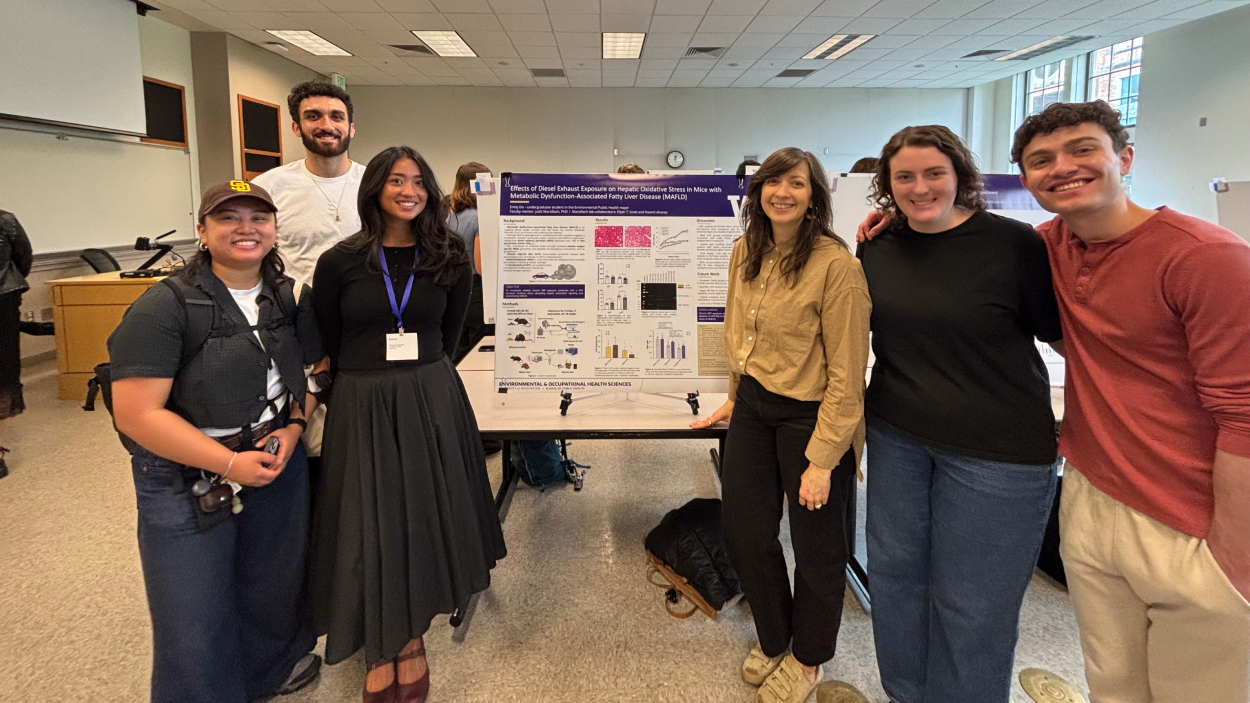
Doing independent research taught her a great deal about biological systems, problem solving and patience, she said. It also strengthened her bonds with Marsillach, her labmates and other faculty with labs in the Roosevelt One building.
“I get to see my professors in a different element than class, and understand what they’re passionate about,” she said.
Reducing noise in music classrooms
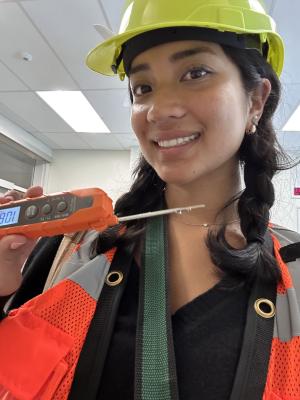
Last summer, as an intern with Public Health – Seattle & King County’s K-12 Schools branch, Do compiled a literature review on the impacts of noise exposure on students in music and band classes.
She recommended tips to reduce noise exposure, including keeping windows open, adding absorbent materials to classroom walls, and providing earplugs to students.
She also wrote a guide for school administrators on how to dispose of vaping devices found on campuses, since the devices are flammable and have batteries that need to be disposed of as hazardous waste.
Endless opportunities
Do has found the experience of majoring in environmental public health supportive on many levels — from her peers to teaching assistants, faculty and administrative staff. “They all work together to make everyone feel so important, and a valued member of the community,” she said.
“All the professors want to provide the students with opportunities — and there are so many,” she added.
She also contributed to the department’s tight-knit community as an officer in the Student Environmental Health Association. She has collaborated with fellow students who also run campus organizations, including Angelina Durbin and Tejasvini Vijay. “Everyone is so accomplished in the student cohort I’m part of, and that drives me to do more,” she said.

A future in medicine
After graduation, Do will be taking two part-time jobs in Seattle to train for her future in medicine: one as a hospice aide and the other as a medical assistant at an ophthalmology clinic. Next year, she plans to apply to medical school, with the goal of working in palliative medicine to help people with terminal or chronic illnesses live with the least pain.
“Being a physician has been my dream forever,” she said. “I think that having an environmental health background will be so important for me as I think about patients in the scope of their lives.”