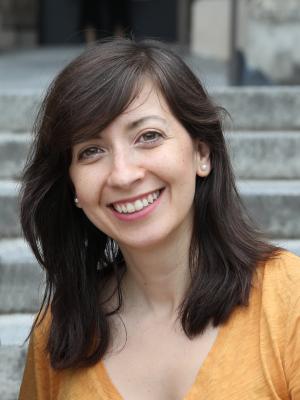
Judit Marsillach, PhD
About
Dr. Judit Marsillach is Assistant Professor in the Department of Environmental & Occupational Health Sciences at the University of Washington School of Public Health. In May 2021, she was appointed as the Sheldon D. Murphy Endowed Chair in Toxicology and Environmental Health.
Dr. Marsillach’s research focuses on understanding the dynamics of environmental exposures and oxidative stress leading to the development of adverse birth outcomes and chronic human disease. Her work integrates biochemistry, environmental health, neurobiology, proteomics, toxicology and translational medicine, offering promising approaches for understanding the mechanisms of exposure-related diseases and for characterizing biomarkers of exposure and disease, as well as identifying potential therapeutic target proteins.
Dr. Marsillach received her PhD with honors from the University Rovira i Virgili, and her BS in Biochemistry from the University Autonoma of Barcelona, both in Spain. She completed her post-doctoral research in detection of organophosphorus exposures using adductomics at the University of Washington’s School of Medicine.
Education
- B.S. in Biochemistry, University Autonoma of Barcelona
- PhD in Biochemistry, University Rovira i Virgili
- Postdoctoral degree, University of Washington
Mentorship
Available to mentor new Master's and Doctoral students in autumn 2027. Please follow the instructions on the How To Apply page.
DEOHS Students Mentored
Sex- and Diet- Dependent Microglial and Proteomic Responses to Chronic Diesel Exhaust Exposure in the Ldlr -/- Mouse Brain
Jenielle Guevarra Domaoal | MS Thesis | 2026 | View
PFAS and Fish Consumption: A Review of Blood PFAS Concentrations and Public Health Guidelines
Phoebe Nadeau | MS Applied | 2025 | View
Investigating Agricultural Exposures, Inflammation, and Child Respiratory Health in the Lower Yakima Valley of Washington
Hannah Cutler Dye | MS Thesis | 2025 | View
Enhancing Pesticide Exposure Monitoring in Agricultural Workers using Dried Blood Spots and Adductomics
Rothboury Doung | MPH | 2023 | View
Research
Interests
The exposome. Biomarkers of exposure and disease. Paraoxonases. Neurotoxicology. Early life exposures. Developmental exposure to environmental chemicals. Agricultural Health. Occupational exposures. Oxidative stress. Pesticides, metals, volatile organic compounds and traffic-related air pollution. Gene-environment interactions. Environmental mixtures. Novel methods of exposure assessment and analysis. Adductomics and proteomics. Cardiometabolic outcomes. Alzheimer’s disease. Adverse birth outcomes.
Projects
- Diesel exhaust and cardiometabolic toxicity. This project aims to dissect molecular pathways responsible for the development and progression of chronic inflammation, in contrast with those involved in the inhibition or resolution of it, a central component in the cardiovascular and metabolic toxicity induced by air pollution.
- Diesel exhaust and neurotoxicity. This supplement to the RESTORE grant aims to study neurodegenerative outcomes induced by air pollution.
- Evaluation of cumulative early life environmental stressors. To develop a life-stage exposomic approach characterizing both chemical and non-chemical stressors from child health cohort data to identify early and preventable health impacts in children in rural agricultural communities.
- Characterization of the prenatal proteome and adductome. We will archived residual newborn dried blood spots to identify fetal signatures of exposures to selected environmental pollutants using mass spectrometry identification of exposure-driven post-translational protein modifications (adductomics) and assess newborn wellness through their proteome in vulnerable communities that tend to be disproportionally exposed to toxicants.
- Volatile organic compound (VOC)-adducted protein in auto repair workers (EDGE). We are generating mass spectrometry-based protocols to biomonitor VOC exposures using VOC protein adducts in plasma and dried blood spots of auto repair workers, as part of a safer degreaser local public health intervention.
Publications
Selected publications
- Interdisciplinary data science to advance environmental health research and improve birth outcomes
- Paraoxonase-1 (PON1) Status Analysis Using Non-Organophosphate Substrates
- HDL Proteome and Alzheimer's Disease: Evidence of a Link
Engagement
Equity, diversity and inclusion
Part of my research focuses on health disparities between rural and urban communities and how the environment impacts disease outcomes. Rural communities are disproportionately exposed to multiple chemicals and other stressors that can have an impact on their residents’ health and well-being. The immediate and long-term consequences of these exposures have a direct impact on life quality due to reduced access to health care, policies of local government, health disparities, changes to diet and exercise, low socioeconomic status and corporate interests.
My goals are to 1) generate evidence of disproportionate exposure-disease relationships in rural and non-rural communities to improve clinical patient care to reduce and prevent specific disease outcomes, and 2) translate research findings into updated regulations to prevent or limit certain exposures and to generate preventative guidelines for populations at-risk.
As a faculty member of DEOHS, the School of Public Health and the University of Washington, I am committed to promoting equity, diversity and inclusion in classroom and work environments. As a researcher, I will continue engaging and creating fruitful partnerships with vulnerable communities and stakeholders. As a mentor, I aim to foster an open, inviting and safe environment that welcomes diversity. As an instructor, I promote an accessible, inclusive and respectful environment conducive to community-building and positive learning experiences. As a first-generation college graduate belonging to an underrepresented group in STEM, I aim to use my power and privilege to promote equity, diversity and inclusion and to continue receiving EDI education through anti-racism trainings, affinity group meetings and other opportunities.
Community and research partnerships
I have several ongoing national and international research partnerships. I have worked with the Community Engagement and Research Translation Cores of the UW Superfund Research Program to disseminate research findings with community partners, including the Duwamish River Cleanup Coalition, the US Environmental Protection Agency’s community advisory group for the Duwamish Superfund Site and the Northwest Toxic Communities Coalition (NWTCC).
The DRCC includes ten community, environmental and tribal organizations focused on the cleanup of the Lower Duwamish Waterway Superfund site. The NWTCC represents residents and environmental health organizations in communities affected by hazardous waste sites throughout EPA Region 10 (Washington, Oregon, Idaho and Alaska). I have also worked with DEOHS staff to prepare fact sheets associated with high-impact publications written for non-technical audiences and to prepare press releases for our publications, projects and fact sheets.
I am a member of the Laboratory & Research Committee and co-leader of their Project Review Subcommittee at SoundBio Lab, a biology maker-space that provides laboratory space and shared resources for entrepreneurs, science enthusiasts, citizen science projects and students. The committee’s goal is to contribute to the SoundBio Lab mission by creating safe, welcoming and supportive spaces for people to find community and practice science.
Teaching practices
I teach ENV H 515: Organ System Toxicology (Winter) and ENV H 405: Toxic Chemicals and Human Health (Spring). While ENV H 405 surveys the most important concepts in toxicology, with a focus on the impact of chemicals on human and environmental health, ENV H 515 focuses on organ toxicology and organ systems.
My goals as an instructor are to (1) effectively help students understand and rationalize the contents of a subject, favoring critical evaluation and open discussions; (2) apply the content to real-world scenarios; and (3) cultivate an interest in public health and toxicology, while promoting a respectful and inclusive environment.
In the classroom, I incorporate student-centered active learning approaches to create accessible, engaging and interactive sessions, and to improve our students’ overall learning experience.
Service
DEOHS Committee service:
- Roosevelt Advisory Committee, chair
- Faculty Search Committee, member
- PhD Exam Committee, member
- DEOHS Student Award Committee, member (2022)
- DEOHS Retreat Task Force, member (2022)
- UW Interdisciplinary Center on Exposures, Diseases, Genomics and the Environment, member
- UW Royalty Research Fund, reviewer (2021)
- International Conference on Cholinesterases and Paraoxonases, International Advisory Board member
- Society of Toxicology, member