As an internist focused on occupational and environmental health, Dr. Howard Frumkin has helped workers and communities lead healthier lives. As an epidemiologist — a former dean of the UW School of Public Health and professor emeritus in the UW Department of Environmental & Occupational Health Sciences (DEOHS) — he also investigates larger systems that influence our health, including climate change, the built environment, nature contact and sustainability.
Frumkin has served as senior vice president at Trust for Public Land; head of the Our Planet, Our Health initiative at the Wellcome Trust in London; and director of the National Center for Environmental Health and Agency for Toxic Substances and Disease Registry at the U.S. Centers for Disease Control.
On May 26, Frumkin will be the featured speaker at the 2026 Omenn Lecture in Environmental Health, sponsored by DEOHS.
We chatted with Frumkin recently about the health benefits of nature, changing paradigms in environmental health, and rethinking scientific questions in light of traditional ecological knowledge.
You have an accomplished and multifaceted career in environmental health, including as a former dean of the UW School of Public Health. How did you first become passionate about this field?
Thanks for those kind words! In college I developed a passion for worker rights and worker health. I went to medical school to focus on occupational health. When you think about the workplace as a social and environmental determinant of health, you end up thinking not just like a healthcare provider, but also like a geographer and a sociologist and an economist.
For me, that journey took me from thinking about the workplace to thinking about other kinds of buildings, such as homes, to thinking about entire neighborhoods, to thinking about natural areas, to thinking about the planet. So to me, that all became part of the field of environmental health.
How has your perspective on your work changed over time?
Environmental health was rooted mostly in toxicology as a scientific discipline when I started studying it, but I came to think that there was a lot more to it than that. My thinking also evolved in going from negative to positive: despite the term occupational health, it was really a field centered on occupational illnesses and injuries.
If you flip that, are there environments that can actually promote health and well-being, and help people thrive? It was a reversal of most of the paradigm that I had trained in, but it seemed to me to be an important set of questions. You end up thinking about, among other things, nature contact, as an environmental feature that can actually promote health and well-being.
You can also think about community design — how our neighborhoods and communities are put together, the buildings, public spaces, transportation and other infrastructure. And you can also think about the planet writ large, and how planetary systems such as biodiversity, biogeochemical cycles and the hydrologic cycle function to protect human health and well-being.
You’ll be talking about the benefits of contact with nature in your Omenn Lecture. Can you give us a sneak peek?
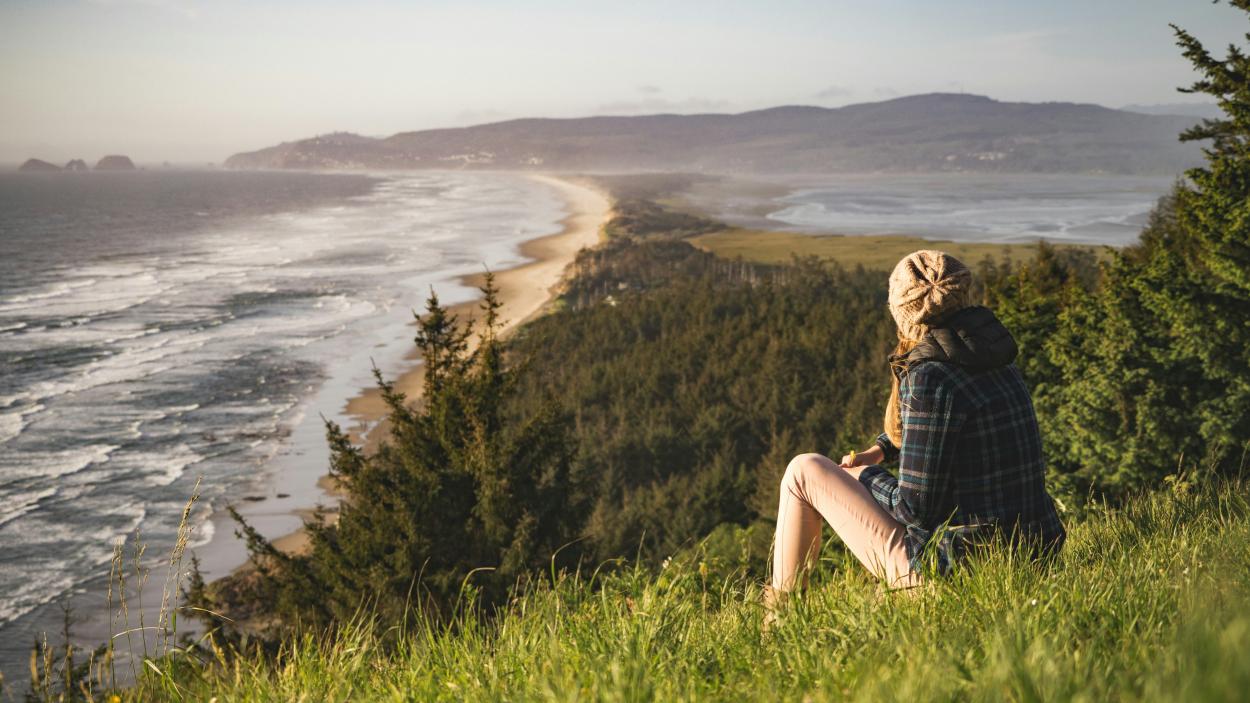
There’s been a real growth in recognition of the importance of nature for human health and well-being. Covid probably helped, because a lot of people found that they could get succor from being outside.
This topic does not fit neatly in the traditional environmental health field, which is still very much intellectually modeled on toxicity, not on wellness. Another challenge: In studying the health impacts of environmental exposures, you have to quantify the exposure. We're not very good at doing that for nature.
What are some of the challenges in trying to assess the health impacts of nature exposure?
We're not accustomed to measuring positive outcomes such as happiness, well-being, social connectivity or contentment. So in contrast to a case of cancer or a case of asthma, which we can readily measure, many of nature’s benefits aren’t readily measured.
Individual variability is another challenge. If you and I both inhale a gob of asbestos, we're both going to be subject to the effects of asbestos. In contrast, if you and I differ a lot in our attitudes toward nature, or our knowledge of nature, or our degree of mindfulness, then the very same “dose” of nature — say, the same walk through a forest — may elicit very different responses.
Leaning into the health benefits of nature contact stands the field of environmental health on its head. It invites us to think about how we might reconceptualize the field, to think much more broadly about understanding the benefits of nature, and how to optimize those benefits for as many people as possible.
What are some different ways you and others are thinking about these benefits?
One dimension is reciprocity, a concept from traditional ecological knowledge or Indigenous knowledge. It suggests that we’re not separate from nature; we're part of nature. It is more a relationship of kinship and stewardship than of transaction and exploitation.
If you think that way, as lots of Tribal members do, then you frame entirely different questions. In fact, some things don't even need to be questioned. There is ancient wisdom that we can't be healthy without healthy ecosystems, and that our fulfillment, our self-actualization as human beings, comes in concert with relationship with the natural world.
Understanding exposures better, understanding outcomes better, and getting our minds around different ways of thinking about the human-nature relationship — all of those are part of what I think is the new scientific agenda in this field.