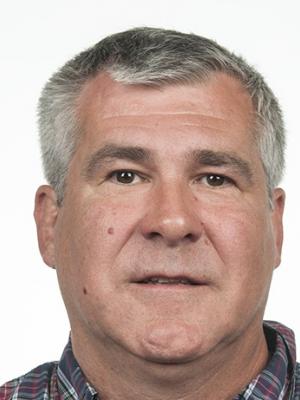
David S. Boyle, PhD
About
As the Program Leader of the Diagnostic program at PATH, I have over 10 years of experience in developing diagnostic tools and technologies for use in low resource settings. I work with academic groups, startup companies, multinational companies and local and national health laboratories and disease programs in the pursuit of projects from landscaping, early assay development and verification through to field testing and product release. I have led the R&D of such assays funded via a variety of donors (including the NIH) and have informed the scientific community via reviews on platforms for HIV treatment monitoring, TB diagnostics, nucleic acid–based diagnosis of TB and infectious diseases, point of care tools and micronutrients. I successfully manage large projects and budgets in a highly matrixed group of multidisciplinary collaborators and partners from industry, academia, public health agencies and donors and key stakeholders across four continents. For the environmental surveillance of polio project, I currently lead groups from the US, South Africa, Kenya and Pakistan (Pak NIH, national emergency operations committee, WHO program, Pakistan polio program) to verify and validate methodologies to identify poliovirus in wastewater. Allied to this is down selecting commercial partners to manufacture the tool and continual engagement with key stakeholders from the BMGF, WHO, US CDC and Europe (RIVM). As the Leader of the Diagnostic Program, I represent the capabilities of a 30 strong multidisciplinary team with expertise in diagnostic development, user experience, field studies, commercialization and administrative support.
Dr Boyle provides expertise to DEOHS on infectious diseases including polio, tuberculosis, and COVID-19.
Education
- PhD, University of Edinburgh (UK)
Affiliations
Mentorship
Not available to mentor new PhD and Master's students.
Research
Research Interests:
My current interests lie with the development of tests and technologies that can help diagnose infectious diseases such as HIV or tuberculosis in low resource settings. This means the tests must be highly accurate but also able to withstand harsh environments with heat, humidity, and dust. The user may have the equivalent of a high school education and so the tests must be easy to use and to read the test result. I am also interested in the use of environmental and clinical surveillance methods to support the use of life saving vaccines against diseases such as polio, typhoid and pneumonia. Allied to this is understanding the relationship between micronutrient deficiency and risk of infection and seroconversion to vaccines via population based surveillance.
Publications
Selected publications
- Feasibility of the Bag-Mediated Filtration System for Environmental Surveillance of Poliovirus in Kenya.
- Point-of-Care HIV Viral Load Testing: an Essential Tool for a Sustainable Global HIV/AIDS Response.
- Assessment of eight nucleic acid amplification technologies for potential use to detect infectious agents in low-resource settings.
- Performance and workflow assessment of six nucleic acid extraction technologies for use in resource limited settings.
- Measurement of micronutrient deficiency associated biomarkers in dried blood spots using a multiplexed immunoarray.