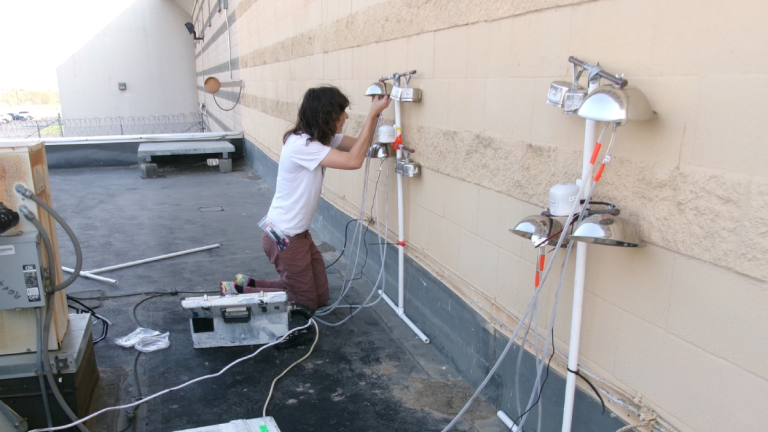
A child’s blood pressure may be influenced by exposure to air pollution before and shortly after birth, according to a new study coauthored by Dr. Catherine Karr, a professor in the UW Department of Environmental & Occupational Health Sciences (DEOHS) and the UW Department of Pediatrics. The study focused on fine particulate matter (PM2.5) and nitrogen dioxide (NO2), common pollutants from vehicles, power plants and other industrial sources.

High blood pressure in children is becoming more common worldwide and can lead to long-term health problems, including heart disease and impaired kidney function. Over the past two decades, childhood hypertension has increased by nearly 80 percent, particularly in countries with higher obesity rates, such as the United States.
Because the roots of adult hypertension often begin in childhood, Karr and other researchers from the Environmental influences on Child Health Outcomes (ECHO) Program, funded by the U.S. National Institutes of Health, examined whether early exposure to outdoor air pollution may influence blood pressure in children.
“This large national study contributes evidence that exposure to a commonly experienced everyday air pollutant (PM2.5) during in utero development and infancy increases blood pressure very early in childhood,” Karr said.
Examining pollution’s impact on kids’ blood pressure
Air pollutants such as PM2.5 and NO2 are known contributors to cardiovascular disease in adults, but their effects on children’s blood pressure are less well understood. Previous studies have produced mixed results and were often limited to single locations. This ECHO study leveraged data from multiple cohort sites across the United States to better clarify these associations.
Researchers analyzed data from 4,863 children ages 5 to 12 from 20 ECHO Cohort Study Sites. They estimated outdoor air pollution exposure at participants’ home addresses during each trimester of pregnancy, across the full pregnancy, and during the child’s first two years of life.
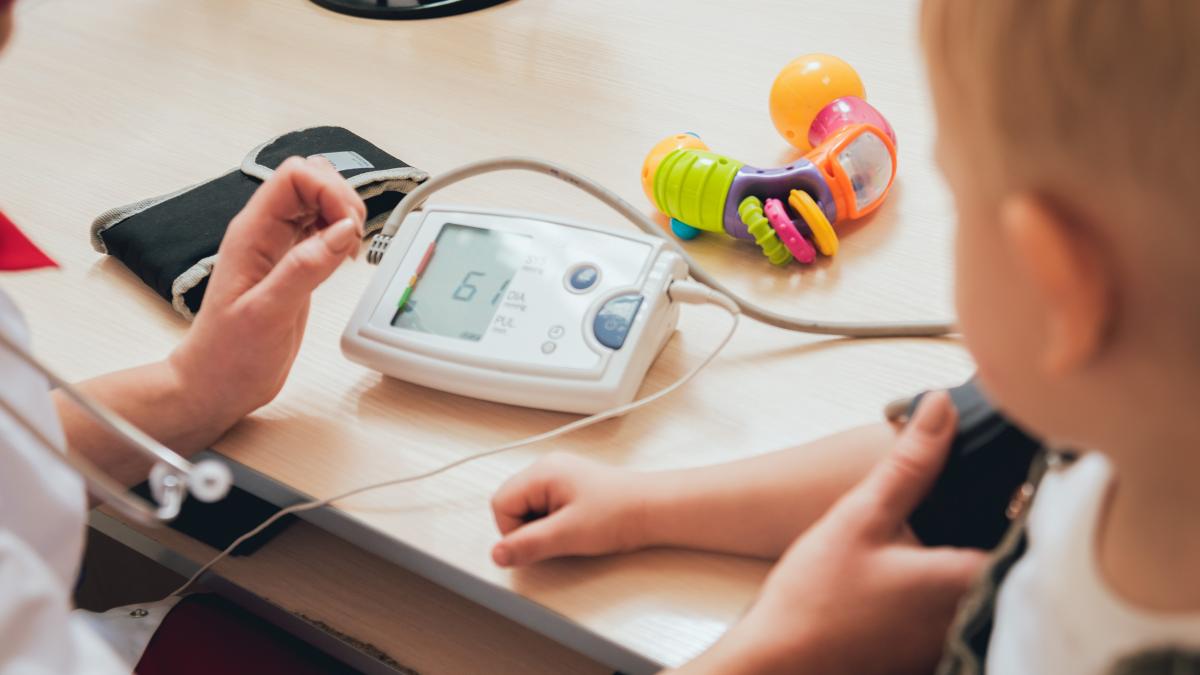
Children’s blood pressure was measured during study visits and compared with typical values for children of the same age, sex and height. Blood pressure was considered high if it fell within the top 10 percent of these values.
Key findings
- PM2.5 exposure and higher blood pressure: Children who were exposed to higher levels of PM2.5 before and after birth had higher blood pressure on average between ages 5 and 12.
- Early pregnancy as a sensitive period: Higher PM2.5 exposure during the first trimester was associated with a more pronounced systolic blood pressure and a greater likelihood of high blood pressure in childhood, indicating that early pregnancy may be a particularly sensitive period.
- Unexpected findings for NO2: Higher maternal exposure to NO2 during pregnancy was associated with slightly lower blood pressure in children. This association was strongest during mid- to late pregnancy, particularly the second trimester, and was not linked to an increased risk of high blood pressure.
- Timing matters: The results suggest that the timing of pollution exposure during pregnancy may be important for understanding its impact on children’s cardiovascular health.
“These findings add to growing evidence that early-life exposure to fine particulate air pollution may affect children’s cardiometabolic health, even at relatively low levels,” said lead author Yu Ni of San Diego State University, previously a postdoctoral researcher at the UW.
“The unexpected findings related to nitrogen dioxide suggest that more research is needed to understand how this type of air pollution may affect children’s developing bodies, as well as whether other environmental factors could be playing a role, such as transportation noise.”
This collaborative research was published in Environmental Research. Additional coauthors from the UW School of Public Health include Adam Szpiro, Christine Loftus, Logan Dearborn, Allison Sherris and Sindana Ilango.
Adapted from the original post by the ECHO Program.